Google AI Overview is the AI-generated answer block that now appears at the top of roughly half of all Google search results, summarising information from multiple sources into a single response with inline citations. As of January 2026, it runs on Gemini 3, and as of February 2026, it cites pages that rank outside the top 10 organic results more often than it cites pages that rank inside it. That second fact is the one that changed everything.
This guide is the long version of what an SEO professional needs to understand about AI Overview in 2026 – how it works, what triggers it, how citations are actually picked, what the 2026 updates changed, and what you can do this quarter to earn more of them.
- How AI Overview actually works in 2026
- The 2026 citation data: what actually got cited (and what changed)
- AI Overview vs AI Mode vs Search Generative Experience
- How to earn AI Overview citations (the 2026 GEO playbook)
- How to measure AI Overview visibility
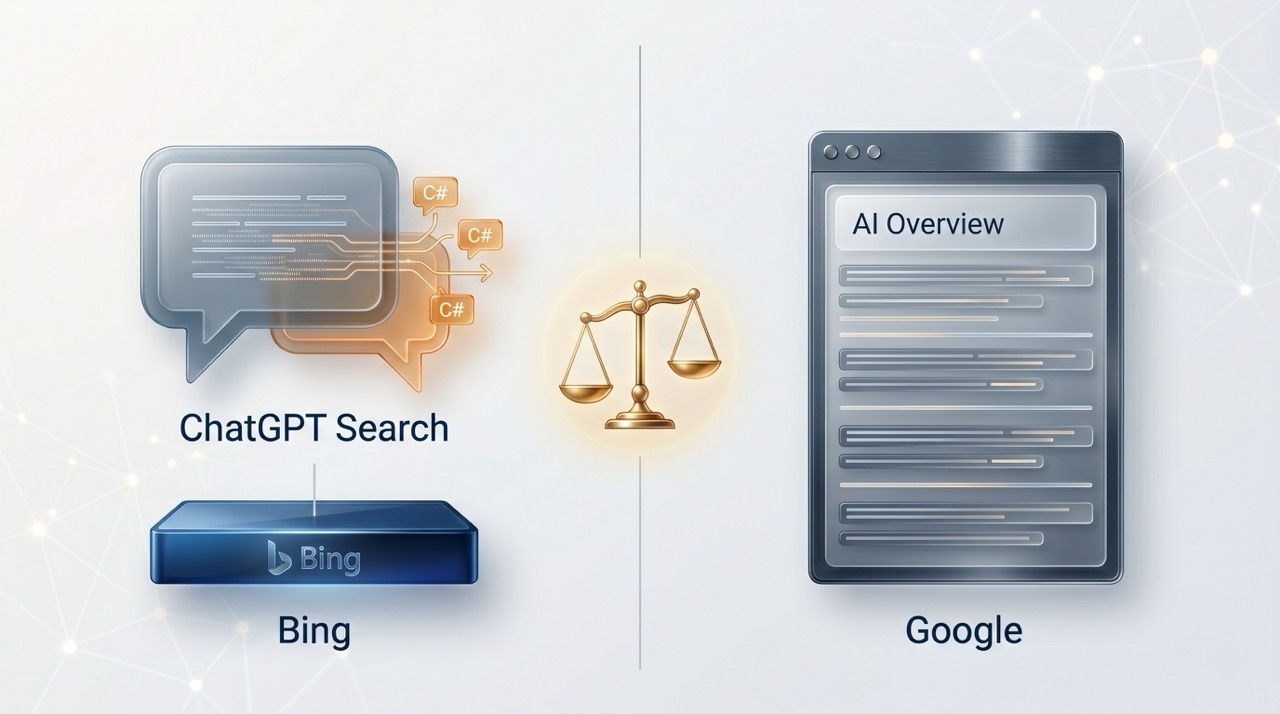
- How AI Overview compares to Perplexity, ChatGPT Search, Bing Copilot
- Common AI Overview mistakes that kill citation eligibility
- How to turn off AI Overview (the user-side answer)
- The May 2026 inline links and creator attribution update
- Where AI Overview is going next (honest forecast)
- FAQ
How AI Overview actually works in 2026
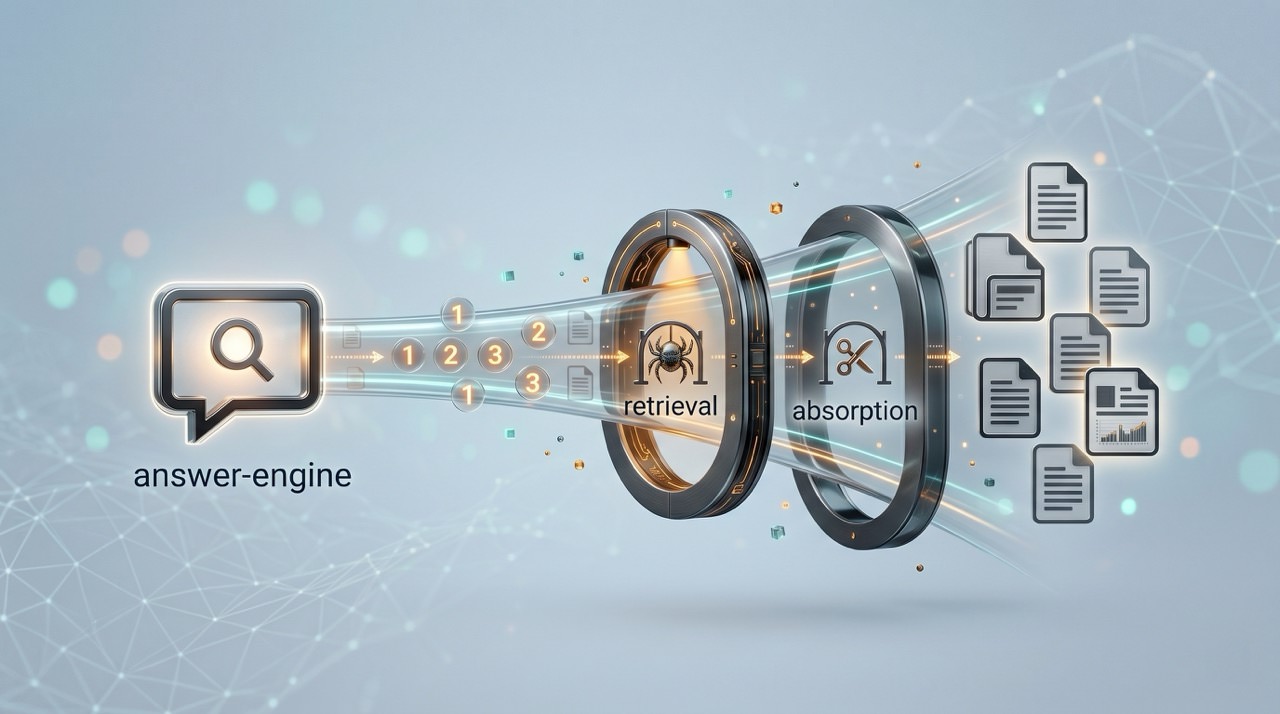
AI Overview is a Retrieval-Augmented Generation system. When a query arrives, Google first decides whether an AI-synthesised answer would help (more on the triggers below). If yes, the system runs three steps: it expands the original query into multiple sub-queries through a process Google calls query fan-out, retrieves candidate sources for each sub-query, then generates a synthesised answer with citations linking back to the most relevant ones.
The query fan-out mechanism
Query fan-out is the most important mechanic to understand if you want to earn citations. A single user query becomes 5–15 related sub-queries inside the model. A search for “best CRM for startups” might fan out into “CRM features startups need”, “CRM pricing comparison”, “CRM integrations small teams”, “CRM free tier limits”, and several more. Each sub-query retrieves its own candidate pages. The final AI Overview pulls from across the union, not from one ranking.
The implication is direct. A page that ranks first for the head term but has nothing to say about the sub-queries earns one citation slot at most. A page that demonstrably covers multiple sub-queries with clear, citable claims earns more citation slots and more often. This is why “topical depth” stopped being SEO jargon in 2026 and started being a measurable input into citation eligibility.
How sources actually get selected for citation
Once candidate pages are retrieved across all sub-queries, the model picks 3–5 sources to cite per answer. The selection criteria are not published, but the observable patterns across 2026 citation studies are consistent:
- Direct-answer structure. Pages that state their core claim in the first 100 words get cited more than pages that build up to the claim.
- Claim clarity. Specific, numeric, attributable statements (“the median rollout time was 14 days”) get cited more than hedged ones (“rollout times can vary”).
- Entity authority. Pages on domains with strong topical entity associations (verified by the Knowledge Graph) get cited more than pages on generalist domains.
- Multi-format coverage. Pages with relevant images, tables, structured data, and video assets get cited more than text-only equivalents.
- Freshness for time-sensitive queries. Recently published or updated pages get cited more on news-adjacent topics.
- Schema and structured data alignment. Schema does not automatically unlock citations – Google has said as much publicly – but pages with clean structured data are easier for the model to parse.
The ranking signal is still in the mix. Google indexes the page through normal Search infrastructure before AI Overview can consider it. But ranking is no longer sufficient on its own, and as of February 2026 it is no longer the strongest variable either.
What Gemini 3 changed in January 2026
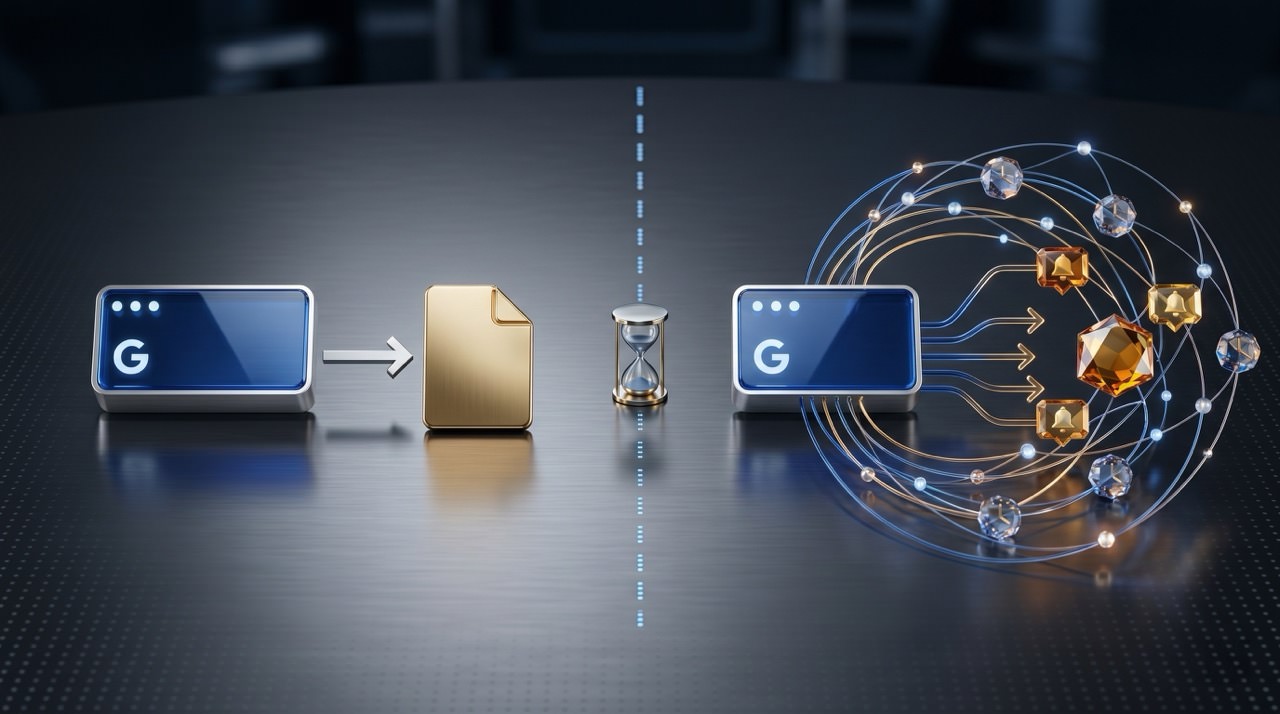
On 27 January 2026, Google upgraded AI Overview to Gemini 3 as the global default model. The shift is the most plausible explanation for the citation pattern collapse that followed (covered in the next section). Gemini 3 reasons more aggressively over sub-queries and is less anchored to the original query's top organic results, which means the model is willing to cite a page from position 47 if it has the cleaner direct answer for one of the fan-out sub-queries.
For SEO teams that built their AI visibility strategy around “rank top 10 and you will get cited”, this is the structural break.
The 2026 citation data: what actually got cited (and what changed)
The shift in citation behaviour between mid-2025 and early 2026 is the single most important data point in the AI Overview landscape. The numbers come from multiple independent sources and they all point the same direction.
The top-10 overlap collapsed
In a <a href=”https://ahrefs.com/blog/” target=”_blank” rel=”nofollow noopener noreferrer”>July 2025 Ahrefs study</a> of 1.9 million AI Overview citations, 76 percent of cited pages ranked in the top 10 organic results for the same query. By early 2026, the overlap had dropped to roughly one-in-three citations coming from top-10 pages – and a BrightEdge analysis published in February 2026 put the overlap as low as 17 percent.
Different methodologies produce different exact numbers, but every study published in 2026 shows the same direction: ranking and citation have decoupled. A first-page result no longer translates into an AI Overview citation by default.
What query types trigger AI Overview now
AI Overview triggers on roughly 48 percent of all tracked queries in 2026, up 58 percent year over year. The triggering is not evenly distributed across query types.
Per Seer Interactive's 2026 update, the breakdown by query class:
- Comparison queries: 95.4 percent trigger rate. Almost every “X vs Y” query gets an AI Overview.
- Question-format queries: 85.9 percent. Anything starting with how, what, why, when.
- “Near me” informational: 76.9 percent. Local-intent informational queries.
- Informational queries overall: 36 percent.
- Commercial queries: 8 percent.
- Transactional queries: 5 percent.
The industry distribution is also uneven. Education queries went from 18 percent trigger rate to 83 percent between February 2025 and February 2026. B2B Tech climbed from 36 to 82 percent. Restaurants climbed from 10 to 78 percent. Some verticals are now effectively AI-first SERPs.
CTR impact and the survival path
Seer Interactive's analysis of 3,119 informational queries between June 2024 and September 2025 found organic click-through rate dropped 61 percent (from 1.76 to 0.61 percent) for queries with AI Overviews. Paid CTR dropped 68 percent.
The survival path is in the same data. Brands cited inside an AI Overview earned 35 percent more organic clicks and 91 percent more paid clicks than uncited competitors. The click did not disappear – it concentrated in the cited set. Being one of the 3–5 cited sources became more valuable than being the number-one organic result without a citation.
This is the operative shift for 2026. The metric that matters is citation share, not ranking share. Treating citation as the new ranking is the only mental model that survives contact with the 2026 data.
AI Overview vs AI Mode vs Search Generative Experience
The terminology has shifted enough times to be genuinely confusing. The current state in 2026:
AI Overview is the AI-generated answer block that appears above organic results on a regular Google search page. It is the production product available in over 100 countries, integrated into the normal SERP.
AI Mode is a separate conversational mode launched in 2025 that opens a Gemini-powered chat interface inside Google Search. It is accessed through a dedicated tab or by enabling the experimental feature, and it produces longer, more conversational responses than AI Overview. Both AI Mode and AI Overview share the same underlying model (Gemini 3 as of January 2026) and the same citation mechanics.
Search Generative Experience (SGE) was the original 2023 name for what is now AI Overview. The term is largely retired but you will still see it in older articles and some Google documentation.
The relevant ranking shift is the same across all three surfaces. Citation logic is shared, fan-out is shared, the data on what gets cited is shared. Strategy targeting AI Overview earns citations in AI Mode automatically.
How to earn AI Overview citations (the 2026 GEO playbook)
This is the actionable section. Six interventions that move citation eligibility, based on what the 2026 data actually shows.
Direct-answer structure
The single most measurable lever. Pages that answer the query within the first 100 words are cited at substantially higher rates than pages that build up to the answer.
The structure that works:
- Opening paragraph: a direct, factual, specific answer to the page's core query. No throat-clearing, no “in this article we will explore”. State the answer.
- Second paragraph: the context. Why the answer is the answer, what the qualifications are, where the nuance lies.
- Then: the depth. Sections that cover the sub-queries the fan-out will likely generate.
For comparison queries, the direct answer is a comparative claim (“Tool A wins for teams under 50, Tool B wins above”). For how-to queries, it is the first step or the time-to-completion. For definition queries, it is the definition.
Fan-out coverage – the multi-query mental model
Stop writing for a single query. Start writing for the cluster of sub-queries the fan-out will generate.
The workflow:
- Identify the head query you want to rank for.
- Mentally fan it out into 8–15 sub-queries. (“CRM for startups” → “what features matter for early-stage”, “what does CRM cost monthly”, “free CRM limits”, “integrations with Slack/Linear”, “data migration from spreadsheets”, “team size thresholds”, etc.)
- Confirm the fan-out against real data – People Also Ask sections, related searches, and AI Mode follow-up suggestions all surface real sub-query intent.
- Build the page so every sub-query is answered explicitly, in its own H2 or H3, with a citable claim.
This is the practical replacement for “write to the keyword”. The keyword is the entry point; the sub-queries are the page.
Citation-worthy formats
The 2026 data on what gets cited is consistent across studies:
- Original data and proprietary statistics are cited far more than rewrites of others' data. If you can publish one original benchmark, one survey, one analysis of your own product's data, that single asset will earn more citations than 20 derivative posts.
- Step-by-step instructions with explicit numbered steps and time estimates outperform narrative how-to.
- Comparison tables with named entities and specific data points are highly citable.
- Numbered lists with claim-per-item structure are easier for the model to extract than prose paragraphs.
- Quotes from named individuals with attribution are increasingly cited as Google's new emphasis on creator and expert attribution lands.
The common thread is extractability. The AI Overview model is choosing fragments that can stand alone as cited claims. Content engineered for extractability is content engineered for citation.
Entity authority and brand mentions
Citation does not run on backlinks alone. It runs on entity association – whether the Knowledge Graph and the model's training data treat your domain as a recognised authority on the topic.
The things that build entity authority for AI Overview purposes:
- Consistent topical focus. A domain that publishes broadly on one topic builds stronger entity association than one that publishes one piece on the topic in a sea of others.
- Branded mentions in authoritative third-party content. Being named as a source, expert, or example in Wired, Reuters, or major industry publications does more for entity authority than a single backlink.
- Author attribution with verifiable credentials. Bylines that link to LinkedIn, professional registries, or verified social profiles connect content to entities the Knowledge Graph already knows.
- Wikipedia presence. A Wikipedia page on your brand or its founder is one of the strongest entity signals available, when warranted.
- Schema.org Organization and Person markup with sameAs links. This is the technical signal version of the same idea.
Schema and structured data that actually matters
Schema does not automatically earn citations. Google has said this directly. But schema does make pages easier for the model to parse, and that helps at the margin.
The schema types that consistently correlate with AI Overview presence in 2026:
- FAQPage for any page with a Q&A section. This one is high-confidence.
- HowTo for procedural pages with named steps.
- Article with author, publisher, and date markup.
- Product for product pages.
- Organization with sameAs and knowsAbout properties.
- Person for author bios.
What does not help: stuffing schema types that do not match content. Google's <a href=”https://developers.google.com/search/docs/appearance/structured-data/intro-structured-data” target=”_blank” rel=”nofollow noopener noreferrer”>structured data documentation</a> explicitly warns against marking up content that does not visibly appear on the page.
Subscribed publisher and creator attribution paths
On 6 May 2026, Google rolled out five updates to how AI Overview displays citations: inline links next to the cited text, hover previews on desktop, suggested next-step articles at the end of responses, labels for content from publications a user subscribes to, and richer attribution for creators on platforms like Reddit, YouTube, and X. The full set is covered in the <a href=”https://searchengineland.com/google-updates-links-within-ai-overviews-ai-mode-476571″ target=”_blank” rel=”nofollow noopener noreferrer”>Search Engine Land write-up of the update</a>.
The strategic implications for content teams:
- Build subscription relationships where they apply. Newsletter sign-ups, paid newsletter tiers, content partnerships with publishers Google might label “subscribed” – any of these increase the chance a portion of the audience sees a “Subscribed” label on your citation, which Google says materially lifts click-through.
- Strengthen named-author content. Creator attribution is now richer. Articles published under a recognised personal byline that connects to a public profile gain credibility weight the AI Overview surfaces visibly.
- Be present on the platforms Google now attributes specifically. Reddit, YouTube, X, and increasingly Substack get named-source citations in AI Overview. Showing up on those platforms as an expert source is now a citation surface in its own right.
How to measure AI Overview visibility
Standard rank trackers do not measure AI Overview citation. The new measurement stack:
Citation tracking tools – several SEO platforms launched AI Overview citation tracking in 2025–2026 (Semrush, Ahrefs, BrightEdge, and a wave of dedicated GEO startups). The core capability is the same: track a list of queries, record whether your domain appears as a cited source, and trend the rate over time. A purpose-built tool like the one at tools.serptop.pro/ai-citation-tracker/ focuses specifically on this surface.
Search Console as a proxy – Search Console does not separately report AI Overview citations, but you can identify queries with AI Overviews appearing through the impressions-versus-clicks pattern. Queries with sharply elevated impressions and depressed CTR relative to their ranking position are almost always AI Overview queries. Filter for them, then assess whether your domain is one of the cited sources by checking the live SERP.
Manual SERP audits – the irreducible step. Pick your priority query list, run them in an incognito window, screenshot the AI Overview, log whether you were cited. Weekly cadence for high-priority queries, monthly for everything else.
Share of voice across AI surfaces – AI Overview is one surface among several that matter in 2026. ChatGPT Search, Perplexity, Bing Copilot, and the wave of newer entrants are all worth tracking. Citation behaviour differs across them. A page that earns AI Overview citations may not earn Perplexity citations, and vice versa.
How AI Overview compares to Perplexity, ChatGPT Search, Bing Copilot
The four major AI search surfaces in 2026 differ in citation behaviour in meaningful ways.
AI Overview (Google) prioritises sources with topical depth, original data, and clear extractable claims. It cites 3–5 sources per answer. Heavily integrated with Google's traditional ranking infrastructure. Largest reach by far.
Perplexity prioritises sources with recent publication dates and clear bullet-point or numbered structure. It cites more sources per answer than AI Overview, often 6–10. It is more willing to cite forums and discussion-based content. Detailed deep dive at Perplexity SEO guide.
ChatGPT Search prioritises sources with strong domain authority and consistent topical history. Citations rotate less than in AI Overview. Heavier weight to legacy authority signals. Covered in ChatGPT vs Google Search comparison.
Bing Copilot uses Bing's index directly, which means the index-level overlap is high but the citation logic is different from Bing's regular SERP. Earlier dependence on top-ranking pages, but converging toward AI Overview's looser ranking-citation relationship in 2026.
The cross-surface playbook: write for extractability and direct-answer structure as the universal baseline, then layer in citation-specific tactics per surface. The 80 percent that earns AI Overview citations also earns ChatGPT and Perplexity citations; the last 20 percent is platform-specific.
For broader landscape coverage see best AI search engine in 2026.
Common AI Overview mistakes that kill citation eligibility
The eight patterns that consistently show up in pages that fail to earn citations even when they rank well.
Burying the answer. Long throat-clearing introductions before the actual claim. The model picks pages where the answer is in the first 100 words. If yours is in paragraph six, you lose.
Hedging every claim. “It depends”, “varies by situation”, “can be different” – these are accurate but uncitable. The model picks specific claims. Add the specific claim first, then qualify it.
Writing for one query when fan-out covers ten. A page that nails the head term but ignores the sub-queries earns one citation at most. A page that covers the head term plus eight sub-queries earns many.
No original data. Rewrites of common knowledge are increasingly invisible. One original benchmark, one survey, one data table from your own product moves you into citation-eligible territory.
Schema mismatched to content. FAQPage schema with no visible FAQ on the page. HowTo schema for a narrative essay. The model parses both the schema and the page, and the mismatch kills credibility.
Date manipulation. Changing the published date without changing the content. Google's freshness signal now cross-references the content delta, not just the metadata. Stale content with fresh-looking dates ranks lower in fan-out retrieval.
Domain topical drift. A finance domain publishing one off-topic AI article will not earn an AI citation on that article. Entity association is at domain level.
Anonymous bylines. Pages without named author attribution earn fewer citations in 2026 than the same content with a verified named author. The May 2026 update raised this weight, not lowered it.
How to turn off AI Overview (the user-side answer)
This is the one section that addresses users rather than SEO teams, because the query “how to turn off AI Overview” appears with enough volume that the pillar would be incomplete without it.
The short version: Google does not provide a permanent global toggle to disable AI Overview in normal Search. The workarounds available in 2026:
- The udm=14 web filter. Append
&udm=14to a Google search URL or use the “Web” filter tab to return only traditional web results without AI Overview. - Browser extensions. Several extensions force the web-only mode by default. uBlock Origin filters and the “Hide Google AI Overviews” browser extension are the most cited as of 2026.
- Account-level settings. Some users see an “AI features” toggle in their Google account settings; the rollout has been inconsistent.
- Use a search engine without AI Overview. Brave Search, Mojeek, Kagi, and Startpage all provide AI-free search options.
The full breakdown is in how to remove AI from Google Search.
The May 2026 inline links and creator attribution update
The 6 May 2026 update is the most consequential change to AI Overview since the Gemini 3 transition in January. Five concurrent shifts, and three of them have real strategic weight.
Inline citations next to the cited text. Previously, citations appeared as a source list at the end of an AI Overview response or as small indicators next to paragraphs. Now they appear directly next to the specific text they support. The implication is that the click happens at the moment of intent, not at the end of reading. Pages that are easy to “spot-check” – clear claim, attribution near the claim – will earn more pass-through clicks. Pages with diffuse, hard-to-locate claims will earn fewer.
Hover previews on desktop. Hovering over an inline link surfaces a preview tile showing the page's title and source identity. This is a soft trust signal. Recognised brands, clear titles, and recognisable logos earn more click-through. Generic or trust-light branding earns less.
Suggested directions at the end of responses. Google now suggests follow-up reading at the end of AI Overview responses, linking to deeper or different-angle articles. This is a brand-new visibility surface. Pages that cover an angle no other source covers – the “unique perspective” Google explicitly mentioned in the announcement – are the candidates.
Subscribed publisher labels. If a user subscribes to a publication, AI Overview now labels that publication's citations as “Subscribed”. Google said early testing showed this materially increases click-through. The strategic move is to build subscription relationships – newsletters, paid tiers, partnerships – wherever they reasonably apply.
Richer creator attribution. Citations from Reddit, X, YouTube, Substack, and similar platforms now show the specific creator or community name rather than just the platform name. Reddit citations show “r/SEO” instead of “Reddit”. YouTube citations show channel names. This converts forum and creator presence into a named-source citation surface in its own right.
The 90-day playbook in response to this update: write three to five pages targeting under-served sub-query angles to fish for “suggested directions” placement; verify all named bylines link to public profiles; audit the platforms where your brand or experts appear, and strengthen the highest-value ones for creator citations.
Where AI Overview is going next (honest forecast)
Three near-term trajectories worth tracking. Forecasts beyond six months are guesses.
Advertising integration is coming. Google has tested AI-powered shopping ads and sponsored placements inside AI responses. Expect formal paid surfaces inside AI Overview within 12 months. The implication for organic strategy: the slots available for organic citation may compress, raising the bar for what earns one.
Citation patterns will keep destabilising before stabilising. The 76 percent to 17 percent top-10 overlap collapse in 6 months is not a finished trend. Expect another shift when Google rolls out the next model version. The teams that adapt fastest are the ones with the most freedom to publish new direct-answer content quickly.
Cross-surface measurement will become table stakes. A 2026 SEO team measuring only Google AI Overview citation share is half-blind. ChatGPT, Perplexity, Bing Copilot, and the newer chat-based search products all generate referral traffic and brand exposure that does not appear in any single dashboard. The teams investing in unified citation tracking across surfaces in 2026 will compound the advantage.
The structural truth underneath all of this: search behaviour is fragmenting. A single user now searches Google, scans an AI Overview, clicks a cited source, asks ChatGPT a follow-up, compares options in Perplexity, and returns to Google with a more specific query. Content that performs in 2026 has to survive that fragmented path – which means it has to work as a citation source on every surface, not just as a ranking page on one.
FAQ
What is AI Overview in Google Search?
AI Overview is the AI-generated answer block at the top of Google search results that summarises information from multiple sources into a single response, with inline citations linking back to the source pages. As of January 2026 it runs on Gemini 3, and as of May 2026 it appears on roughly 48 percent of all tracked queries.
How is AI Overview different from AI Mode?
AI Overview appears above traditional organic results on a normal Google search page. AI Mode is a separate conversational tab inside Google Search that produces longer, more interactive responses. Both share the same model and citation logic.
Do I need a special schema to get cited in AI Overview?
No. Google has said publicly that there is no special AI markup that unlocks AI Overview citations. Standard structured data (FAQPage, HowTo, Article, Organization) makes pages easier to parse but does not automatically earn citations.
Does ranking number one still matter for AI Overview?
Ranking is necessary for indexation but no longer sufficient for citation. Studies in early 2026 found AI Overview citation overlap with the top 10 dropped from 76 percent (mid-2025) to between 17 and 38 percent (early 2026). Pages now get cited from outside the top 10 regularly.
What percent of queries trigger AI Overview in 2026?
Roughly 48 percent of all tracked queries, up 58 percent year over year. Comparison queries trigger AI Overview 95.4 percent of the time, question-format queries 85.9 percent, and informational queries overall 36 percent.
How much does AI Overview reduce click-through rate?
Seer Interactive's data covering June 2024 to September 2025 found organic CTR dropped 61 percent on queries with AI Overviews. Paid CTR dropped 68 percent. Brands cited inside AI Overviews earned 35 percent more organic clicks than uncited competitors – so citation is the survival path.
What is query fan-out and why does it matter?
Query fan-out is the process AI Overview uses to expand a single user query into 5–15 related sub-queries, retrieve candidate sources for each, and synthesise an answer from across the union. It matters because pages that cover multiple sub-queries earn more citation slots than pages optimised only for the head query.
Can I prevent my content from appearing in AI Overview?
Not without removing it from Google Search entirely. There is no separate opt-out for AI Overview that preserves traditional indexation. The available technical options are blocking Google's crawler with robots.txt or using noindex – both remove the page from regular Search as well.
Where does AI Overview pull its sources from?
From Google's regular Search index. The page has to be crawled and indexed first, then it becomes a candidate for AI Overview citation. The candidate pool is wider than top-10 results in 2026 due to query fan-out.
Does adding FAQ schema increase AI Overview citation chances?
FAQ schema correlates with citation presence on Q&A-style pages but does not cause it. The schema makes the structure parseable; the content still has to provide a direct, specific answer to a real question.
How do I track whether my pages get cited in AI Overview?
Three options. Use a dedicated citation tracker that monitors AI Overview for a list of priority queries. Use Search Console to identify queries with high impressions and depressed CTR (a strong signal of AI Overview presence) and check the live SERP for those queries manually. Or run periodic SERP audits in incognito windows and log citation presence in a spreadsheet.
Does AI Overview cite Reddit and other forums?
Yes, and increasingly often. The May 2026 update added richer attribution for forum and creator citations, showing specific subreddits, channels, and creators by name instead of just “Reddit” or “YouTube”. Forum-style content from authoritative communities is now a meaningful citation surface.
How long does it take to earn AI Overview citations after publishing new content?
Fastest documented impacts on AI citation are 30–45 days after publishing structured, direct-answer content. Sustained share-of-voice typically takes 3–6 months of consistent publishing on the topic.
Is AI Overview the same as Search Generative Experience?
Yes, in current product terms. Search Generative Experience was the original 2023 internal name for what launched publicly as AI Overview. The name is mostly retired but some older documentation still uses SGE.
What changed with Gemini 3 in January 2026?
Google upgraded AI Overview to Gemini 3 as the global default on 27 January 2026. The shift is the most likely cause of the citation pattern destabilisation that followed – Gemini 3 reasons more aggressively over sub-queries and is less anchored to the original query's top organic results.
If you are building a longer-term AI search strategy, the question worth asking now is not “how do I rank for the head term” but “how do I make my page the cleanest answer for ten different sub-queries the fan-out will generate”. The pages that win citations in late 2026 are being structured this quarter. The ones that miss this shift will keep ranking and stop earning clicks. That is the operative truth of AI Overview in 2026, and the rest of this guide is the long version of how to act on it.